Early Days on the Hill Country Frontier (1800s)
In the pre‑settlement era, the rolling limestone hills and creek valleys southwest of present‑day Boerne were hunting grounds for Native American tribes.Lipan Apache, Kiowa, and Comanche bands frequented the area into the early 19th century.[1]In 1847, German colonists led by John Meusebach negotiated a famous peace treaty with the Comanche, opening the Hill Country for safer settlement by Europeans.[2]Within a few years, organized communities took root: nearby Boerne (originally Tusculum) was platted in 1852 by German immigrants.[1]
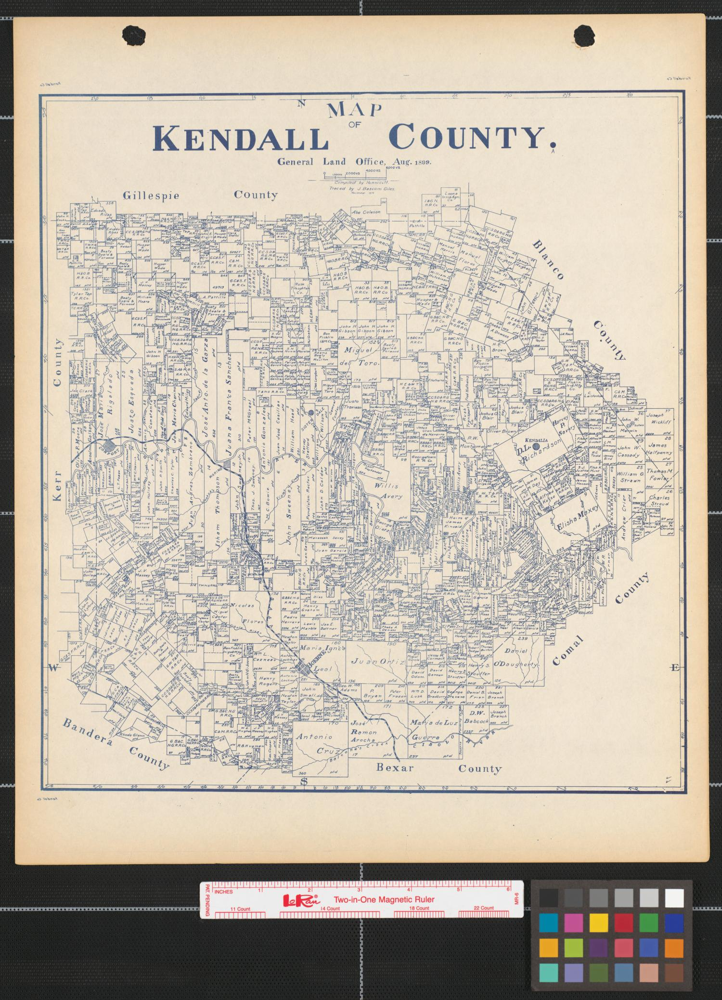
The land that would become Crow‑Karsch Ranch lay outside Boerne along the upper reaches of Cibolo Creek. During the mid‑to‑late 1800s, this region transformed from wilderness to ranchland as pioneers acquired parcels from the state's General Land Office.
By the 1870s–1880s, ranching was the dominant industry in Kendall County. The 1880 agricultural census tallied over 16,259 sheep, producing more than65,200 pounds of wool—alongside many cattle and goats.[1]This tract was likely used as open‑range pasture during that era—unfenced and shared under informal range rights.
Ranching Roots and the Crow‑Karsch Family (1900s)
By the early 20th century, the land that is now Crow‑Karsch Ranch had become an established Hill Country ranch. In the first half of the 1900s—an era of dipping cattle, drilling windmills, and living off the land—Courtney Floyd Crow and his wife Agnes Louise (Karsch) Crow came to own and reside on the ranch. Courtney Crow (born 1884) married Agnes Karsch (born 1891) in 1909.[4]
The couple likely acquired or inherited the ranch by mid‑century. They ranched the land in traditional fashion—raising livestock and maintaining a rural homestead. Their combined surnames became associated with the property, and the area became widely known by the heritage name "Crow‑Karsch Ranch."
Courtney Floyd Crow passed away at age 81 on December 13, 1965, "at his ranch home south of Boerne," according to an archival issue of The Boerne Star hosted by the Portal to Texas History.[5]Agnes Louise Karsch Crow died in 1973 (age 82), and family records and cemetery listings corroborate the 1891–1973 dates.[6]
After Agnes's death, the land passed to relatives—members of the Karsch family. This marked the close of the original family stewardship era and set the stage for later subdivision.
The Land Transitions: Subdivision in the Late 20th Century
In the 1970s and 1980s, the Boerne area experienced rapid growth. Large ranches near the county line—including the Crow‑Karsch tract—began to be subdivided into smallercountry residential tracts for families seeking Hill Country life with room to breathe.
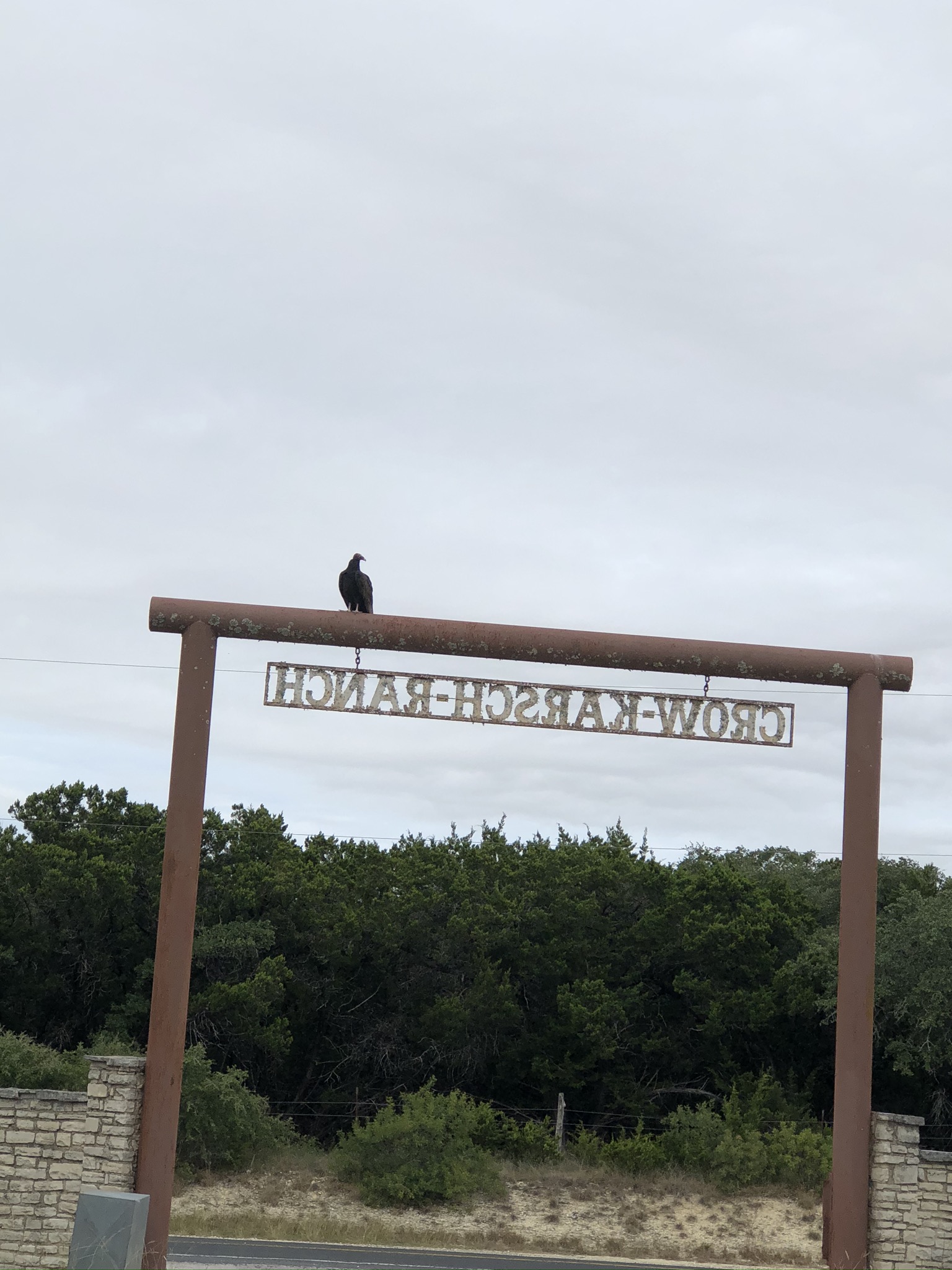
By the late 1970s, the original ranch had been partitioned into multiple acreage parcels. A private road network provided access, and a gateway sign at the entrance identified the community as "Crow‑Karsch Ranch." Modern listings and directions still reference that sign at the entry.[7]
The area retained a peaceful, country character: custom homes on multi‑acre tracts, abundant wildlife, and private roads maintained by residents. Many listings describe the subdivision legal name as CROW KARSCH RANCH and indicate an HOA presence that is often described as voluntary depending on the tract and listing.[8]
High Country Ranch: A Shared Ranch Community (2000s)
In the early 2000s, a remaining core ranch area became the site of an innovative model: High Country Ranch, a shared‑ownership ranch community. Public property descriptions describe it as a ~350‑acre ranch with ~300 acres set aside for hunting and recreation and ownership that includes ashared interest via High Country Ranch LLC.[9]
In practical terms, a buyer owns a private homesite and also holds an undivided share of the larger ranch preserve—enabling hiking, hunting, and the enjoyment of the land's Hill Country views while sharing stewardship responsibilities.
Timeline of Key Milestones
References
- Texas State Historical Association (TSHA), Kendall County (Handbook of Texas) — background on settlement and ranching statistics (including 1880 wool production).View source.
- TSHA, Meusebach‑Comanche Treaty (Handbook of Texas) — 1847 treaty context and significance.View source.
- Library of Congress, Map of Kendall Co., Texas — historic survey map image and item record.View source.
- FamilySearch, Courtney Floyd Crow (1884–1965) — basic family record (marriage to Agnes Louise Karsch).View source.
- Portal to Texas History (UNT Digital Library), The Boerne Star issue containing Courtney Floyd Crow obituary notice (Dec 1965).View source.
- Boerne Cemetery transcription (USGenWeb Archives) corroborating Crow/Karsch dates; plus FamilySearch record for Agnes.Cemetery listing;Agnes record.
- Homes.com listing directions noting the entry sign "Crow‑Karsch‑Ranch".View source.
- Redfin (example listing data) indicating subdivision legal name "CROW KARSCH RANCH" (use as real‑estate corroboration, not primary historical documentation).View source.
- Zillow / Trulia property description for 26670 Karsch Rd describing High Country Ranch as a 350‑acre ranch with 300 acres set aside for hunting/recreation and shared ownership via LLC.Zillow source;Trulia source.
Disclaimer: This page is a community‑friendly narrative assembled from reputable historical references (TSHA, Library of Congress, UNT Portal) and publicly available property descriptions. For legal boundary history, consult recorded plats/deeds with Kendall County and relevant appraisal district records.